New Tamilmv: Complete Guide to Proxy Links & Search Trends (2026)
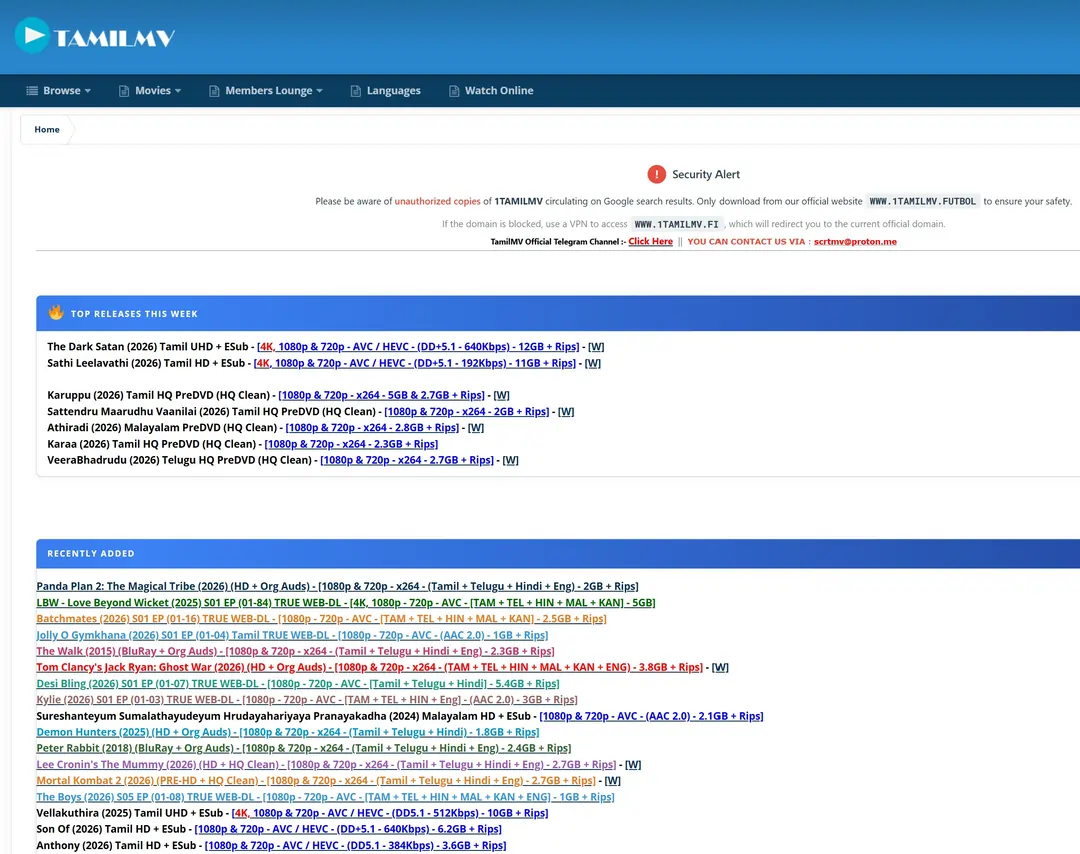
The architecture of the open internet is constantly shifting. Over the past decade, tracking user behavior across content discovery networks has become a highly technical discipline. Among the vast sea of digital media queries, analyzing the search velocity behind the New Tamilmv ecosystem provides fascinating insights into server redundancy, DNS manipulation, and regional traffic management. This comprehensive guide breaks down the underlying technology, search intent, and the cat-and-mouse game of internet accessibility.
For web administrators, SEO professionals, and tech enthusiasts, the evolution of these platforms serves as a masterclass in maintaining high-traffic web properties under extreme duress. By utilizing progressive web structures, distributed content delivery networks (CDNs), and an aggressive domain strategy, these hubs process millions of requests daily.
Table of Contents
- 1. The Evolution: From Static Sites to Dynamic Networks
- 2. Decrypting the Search: Finding the Target URLs
- 3. Analyzing the Global Domain Matrix
- 4. Localization and Regional Traffic Splitting
- 5. Community Hubs and Decentralized Forums
- 6. The Rise of Obscure Top-Level Domains (gTLDs)
- 7. Predictive Trends for Webmasters
- 8. Frequently Asked Questions (FAQs)
Click Below to Enter the Active TamilMV Platform:
1TamilMV.CardsConnect securely to the verified main database.
1. The Evolution: From Static Sites to Dynamic Networks
In its infancy, finding regional digital content required navigating poorly coded, static HTML directories. As user demand surged, platforms like 1tamilmv emerged, revolutionizing the space by introducing structured databases, user-friendly UI, and categorized indexes. However, this massive surge in visibility brought intense scrutiny from Internet Service Providers (ISPs) globally.
To combat DNS blackholing—a technique where ISPs block access to specific domain names—the platform had to evolve from a single centralized website into a robust, multi-node network. They achieved this by deploying aggressive caching strategies and masking their origin IP addresses. This technological leap ensured that even if a primary node was taken offline, the database remained secure and ready to be pointed toward a fresh URL.
2. Decrypting the Search: Finding the Target URLs
When a primary server faces a blockade, an immediate spike is observable in search engine trends. Users, displaying remarkable digital literacy, quickly pivot their search queries. Instead of searching for the brand name alone, search engines record a massive influx of queries for the 1tamilmv new link. This specific long-tail keyword indicates a high-intent user actively seeking the latest proxy bypass.
Interestingly, users often intentionally fragment their queries to bypass automated text filters. It is incredibly common to see search logs filled with variations like 1tamil mv. This fragmented search pattern forces webmasters to heavily optimize their proxy pages for diverse, broken keyword structures to ensure they capture the migrating traffic effectively.
3. Analyzing the Global Domain Matrix
A deep dive into the historical WHOIS data of these platforms reveals a highly sophisticated domain rotation strategy. Years ago, the primary anchor of the network was 1tamilmv.com. However, standard `.com` extensions are governed by ICANN and are highly susceptible to rapid international takedown notices.
Recognizing this vulnerability, network administrators began decentralizing their brand identity across multiple offshore registries. This shift birthed alternative proxies such as 1tamilmv.re (operating under the jurisdiction of Reunion Island). By spreading their assets across various geographic locations, the network drastically increased the legal friction required to dismantle their infrastructure. Furthermore, variations like tamil mv com are often kept active purely as 301 redirect parked domains, passing valuable link juice and SEO authority to the primary active server.
4. Localization and Regional Traffic Splitting
Traffic analytics show that a significant portion of the audience originates from South Asia. To minimize latency and provide a faster user experience, administrators utilize Geo-DNS routing. When an Indian user types in tamilmv in, the DNS resolver routes them to a server located physically closer to the subcontinent, reducing ping times and increasing site speed.
Browser auto-fill behaviors also play a role in SEO strategies. Many users habitually type prefixes, resulting in high search volumes for www tamilmv in. Similarly, to cater to diasporas globally, localized proxies like tamilmv la (Laos) are occasionally deployed. These localized extensions act as regional load balancers, ensuring that massive traffic spikes do not crash a single origin server.
5. Community Hubs and Decentralized Forums
A static website is a single point of failure. Recognizing this, the architectural core of the network relies heavily on the tamilmv forum. Built on lightweight, robust forum software, these discussion boards act as the brain of the community. Even when front-end media indexes are purged from search engines, the forum remains indexed due to its heavily text-based, user-generated content.
The forum is where administrators communicate directly with the user base. Whenever a mass domain ban occurs, the forum is updated immediately with the active proxy list. Because user engagement is incredibly high, these forum pages generate massive organic traffic, making them highly authoritative in the eyes of search algorithms despite the nature of their content.
6. The Rise of Obscure Top-Level Domains (gTLDs)
As traditional country-code domains became harder to retain, webmasters adopted a "burner domain" strategy. This involves purchasing cheap, generic Top-Level Domains (gTLDs) in bulk. It is not uncommon for analytics software to detect traffic flowing through bizarre URLs like 1tamilmv.blue or even 1tamilmv.hair.
These domains cost merely pennies to register. Administrators attach them to advanced Cloudflare configurations, use them until they are inevitably blocked by ISPs, and then discard them. This relentless cycle ensures that the network is virtually unkillable, creating a continuous loop of URL generation and expiration.
7. Predictive Trends for Webmasters
As we analyze the trajectory of these platforms into 2026, the search intent remains aggressively focused on real-time updates. Keywords like tamilmv latest and tamilmv new will continue to dominate trend graphs. Webmasters tracking these ecosystems will notice a continued shift toward obscure academic or island extensions, such as tamilmv ac, utilized purely for their lenient registration policies.
For modern digital architects, the survival of these networks underscores the importance of server redundancy, automated DNS failovers, and the power of a highly engaged community.

8. Frequently Asked Questions (FAQs)
How do webmasters update the 1tamilmv new link during server migrations?
Administrators utilize community bulletin boards and official forums to broadcast the latest proxy domains, ensuring users can bypass ISP blockades effectively. They also use automated Telegram channels and Twitter bots to distribute the fresh URLs instantly.
Why are domains like 1tamilmv.blue or 1tamilmv.hair used?
These are cost-effective generic Top-Level Domains (gTLDs). Webmasters purchase them in bulk to act as temporary proxy networks when primary domains face DNS-level bans. Once blocked, they are easily discarded and replaced.
What is the primary function of the tamilmv forum?
The forum acts as the decentralized heart of the community. Even if the main indexing database goes offline, the forum remains active for peer-to-peer updates, technical discussions, and direct communication between admins and users.